There Is No Antimemetics Division
Review
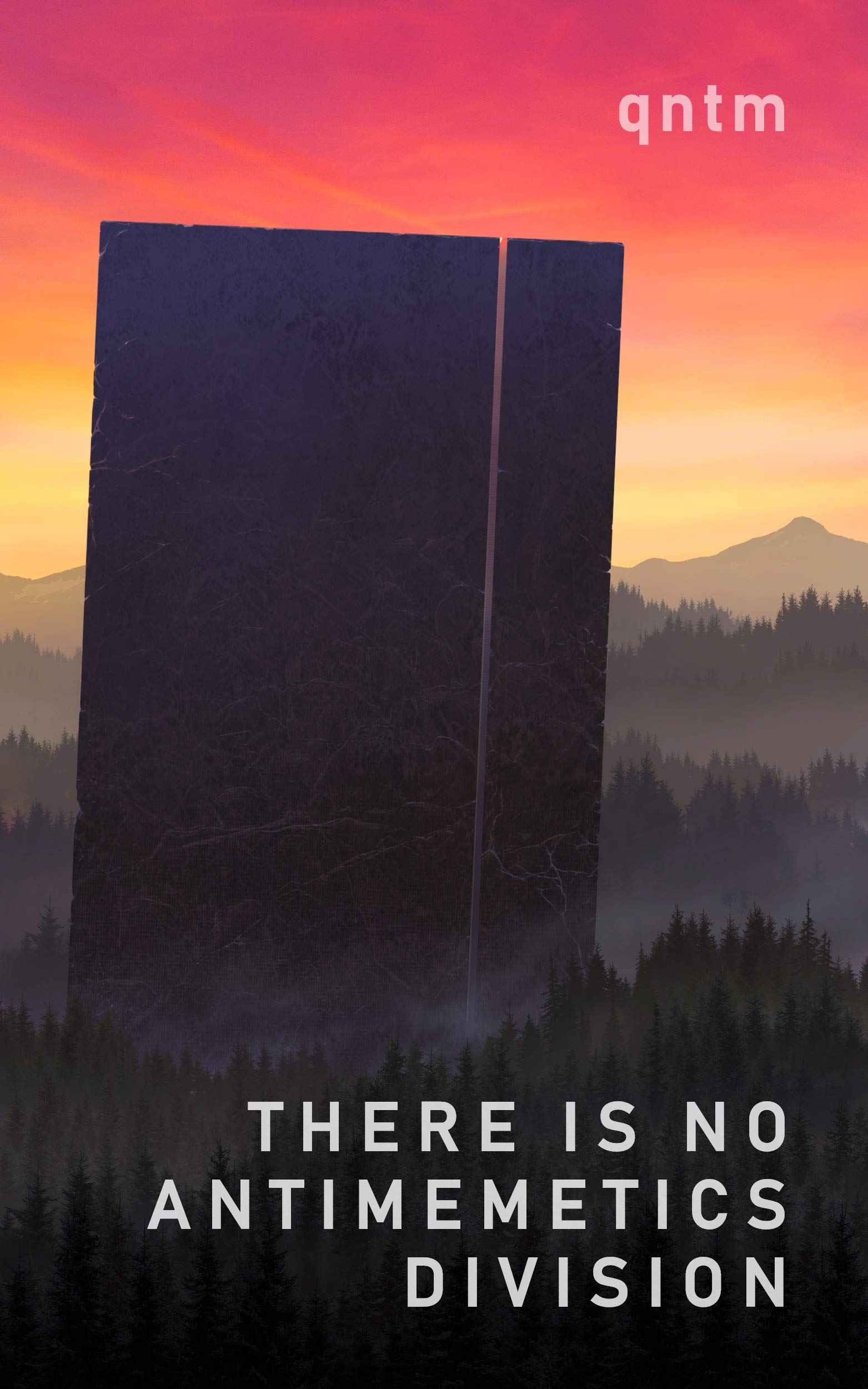
There Is No Antimemetics Division, by , is a book about researchers trying to control dangerous antimemes—ideas that can’t be thought—and how you might combat a foe you can’t even remember exists.
There Is No Antimemetics Division is ’s rewrite of his original edition. I thought the strongest part of the original edition was the first half, written as disjointed short stories with tight plotting. The weakest part was the second half, where the author tried to stitch them into a larger narrative. The execution felt shallow, and the world it described felt like a stage just wide enough to contain the action, with nothing beyond the edges.
This rewrite fixes all of that. The short stories keep their pacing, and some are even trimmed to be tighter and fit more cleanly into the overall story. adds just a few more hints and signposts, which help make the connections clearer. A couple of Unknown Objects that were mentioned in the first book and then sort of vanished from the plot are expanded here and tied directly into the main storyline. Everything builds toward the same conclusion instead of pulling in different directions. The added signposts also make the cyclical nature of the conflict clearer—how people keep trying the same thing, keep losing, and how multiple Antimemetics Divisions have already been wiped out by UO-3125.
There Is No Antimemetics Division is a book you read for the ideas and concepts, and they’re fantastic: that there are antimemes, ideas which cannot be remembered. How do you study an idea you can’t keep in your head? How do you fight something you forget every time you leave the room? How do you win a war against an idea that will kill you as soon as you think it? The world and its complexities are introduced naturally through the short-story chapters, so by the time the narrative really kicks off, you have a solid grounding without lore dumps.
I liked this book a lot. I love stories built around “boring bureaucrats trying to control cosmic horrors” like ’s A Colder War and The Laundry Files.1 The short story format keeps the momentum up; the tension builds but gives you enough slack to breathe, and despite the horrors, there’s hope. That was something missing from the first book, which felt like things were only going to get worse and the characters would only fail.
revisits ideas he explored in Valuable Humans in Transit and Other Stories. Researcher Hix has a “do not upload” directive filed to prevent the Organization from uploading his consciousness if he dies or is near death. explored the horrifying consequences of creating uploaded minds—and how easy it is to ignore their humanity—in Lena and Driver.2 One of the researchers references the quote “Sending this message was important to us. We considered ourselves to be a powerful culture.”, the warning Sandia National Laboratories wanted to convey about nuclear waste disposal. That same message shows up in A Powerful Culture, about disposing of dangerous waste to other dimensions.
There Is No Antimemetics Division reminded me of a few other works as well. The cosmic horrors echo ’s Cthulhu Mythos. Struggling with things beyond understanding is a core theme of and ’s Roadside Picnic, and a key influence of the SCP Foundation, which this book is based on. Adam walking through an abandoned English city devastated by UO-3125 parallels 28 Days Later. UO-3125 itself felt like the Blight in ’s A Fire Upon The Deep in how it spreads via hazardous information. Hix and Adam talking in lawn chairs in the memory of a barbecue they both attended reminded me of how the Bobs meet in virtual reality in Bobiverse. Not being able to see a threat right in front of you recalls the Scramblers in ’s Blindsight, which move only when our eyes saccade. There’s even a nod to Launch Arcologies from SimCity 2000.
I loved this rewrite, and I’m excited at the possibility of getting more Antimemetics stories, which has hinted at. Up next is The Darfsteller and then probably Monday Begins on Saturday while I’m in the mood for bureaucracy and the supernatural, before I really must start This Is How You Lose the Time War for my book club.