The Honor of the Queen
Review
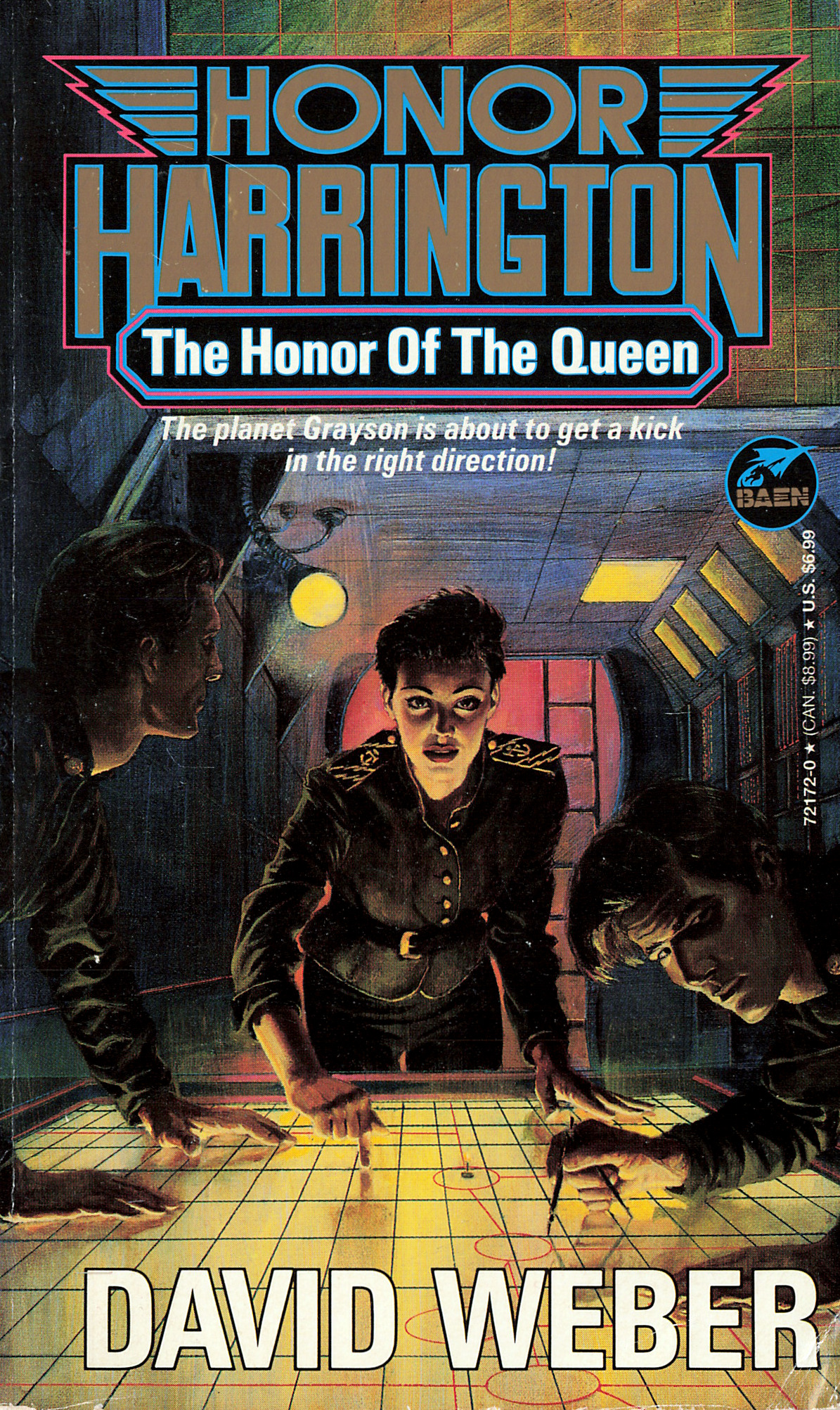
The Honor of the Queen, by , is the second book in the Honor Harrington series. Harrington must forge an alliance with Grayson, a planet of religious conservatives who don’t believe women belong in uniform, while Haven plots to stop her.
Halfway through The Honor of the Queen, I checked Goodreads and was surprised to find it rated higher than On Basilisk Station, because the first half drags under ’s overly verbose world-building and three problems: Harrington has to make uncharacteristic mistakes so the plot can move forward; there’s a constant theme of “the practical naval officer must—regrettably!—overrule the too-trusting bureaucrats”; and is weird about Asian women in a way that hasn’t aged well.
Harrington’s mistakes are especially frustrating because they clash with ’s own hawkish ’90s centrism, which I also flagged in On Basilisk Station: the military always knows what’s right, the diplomats and liberals are hopelessly naive—except when the plot needs Harrington to be the naive one. The leaders of Grayson understand their culture needs to advance; it’s their underlings that are the real problem. The elites can and must work together to control the public, except when they make stupid mistakes apparently.
The ’90s attitude also shows up in ’s treatment of Asian women: Harrington’s mother is exotic, sexy, brilliant, and loyal to her white husband, while Ensign Mai-ling exists only to be sexually assaulted and demonstrate how evil the enemies are.
With all that hanging over it, I thought the book was going to collapse. Then the shooting starts, and as I’ve said before, can write action. In On Basilisk Station, I complained the pacing was uneven: either too fast or too slow. In The Honor of the Queen, he’s improved significantly. The combat moves quickly but still allows time to build tension. And sets up the reinforcements at the end well enough that they don’t feel like a cheap deus ex. But like last time, Harrington’s only trick is being more willing to sacrifice her crew and ship than her opponent—though maybe that’s the consequence of the “despite sacrifice” ethos from above.
A few bits reminded me of other works. The frontier justice on Grayson—lynching men who disrespect women—is straight out of ’s The Moon Is a Harsh Mistress. The religious fanatics with their Mormon-like polygamy reminded me of The Legacy of Leonidas from Honor of the Regiment. But more broadly, was writing in the same moment that produced ’s Debt of Honor and ’s Rising Sun, and it shows: the hawkish politics, the orientalism, and the certainty that the professionals know what must be done but the bureaucrats won’t listen until it’s almost too late.
This book is in conflict with itself: it spends the first half making Harrington incompetent so that she can demonstrate her competence. And the action feels like a retread of the encounter with the Q-ship in On Basilisk Station. But I enjoy the space battles, and nothing else I’m reading delivers that age-of-sail sense of duty and sacrifice. I hope finds a way to let Harrington win without getting her ship blown to hell in The Short Victorious War.