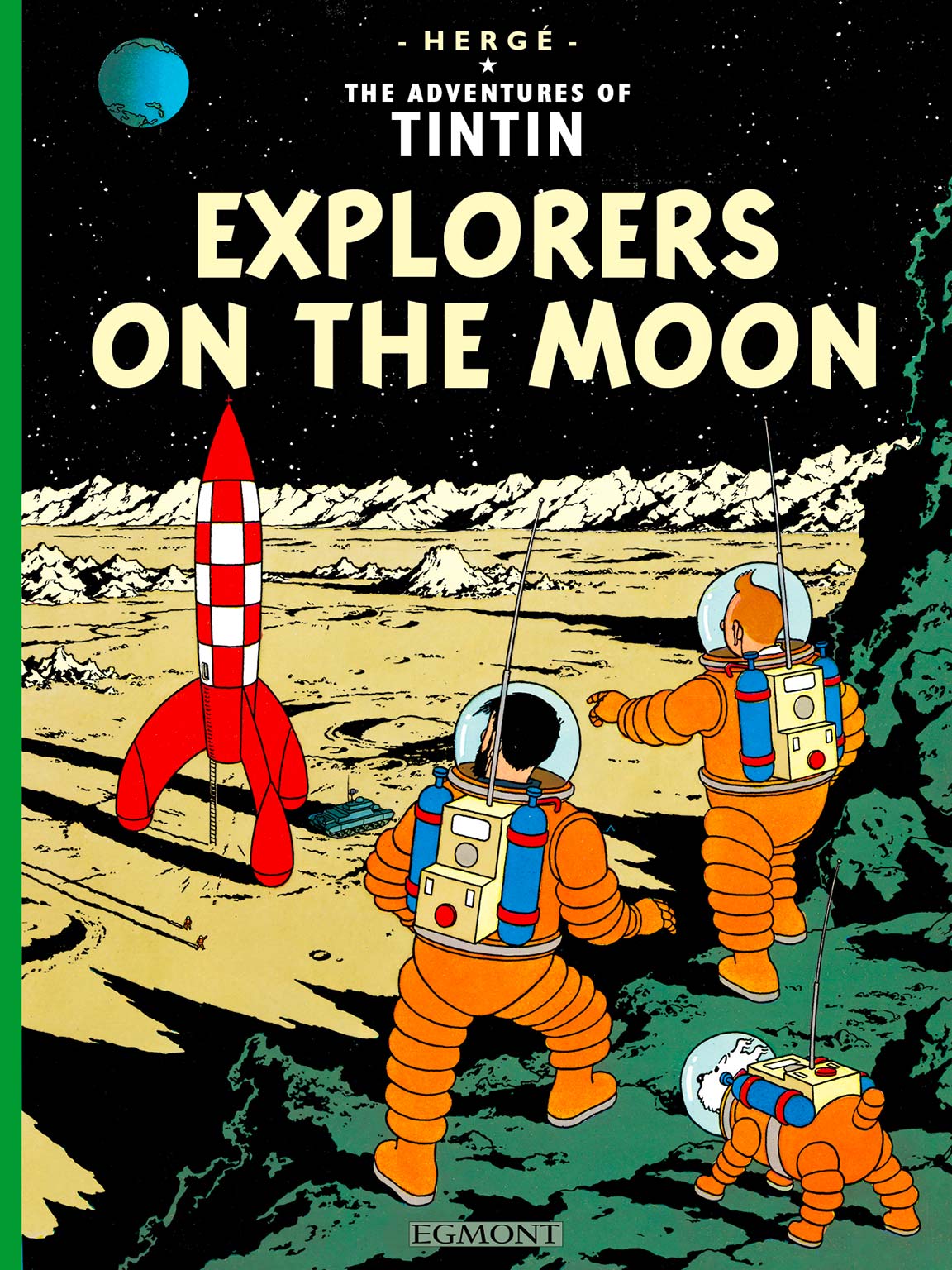
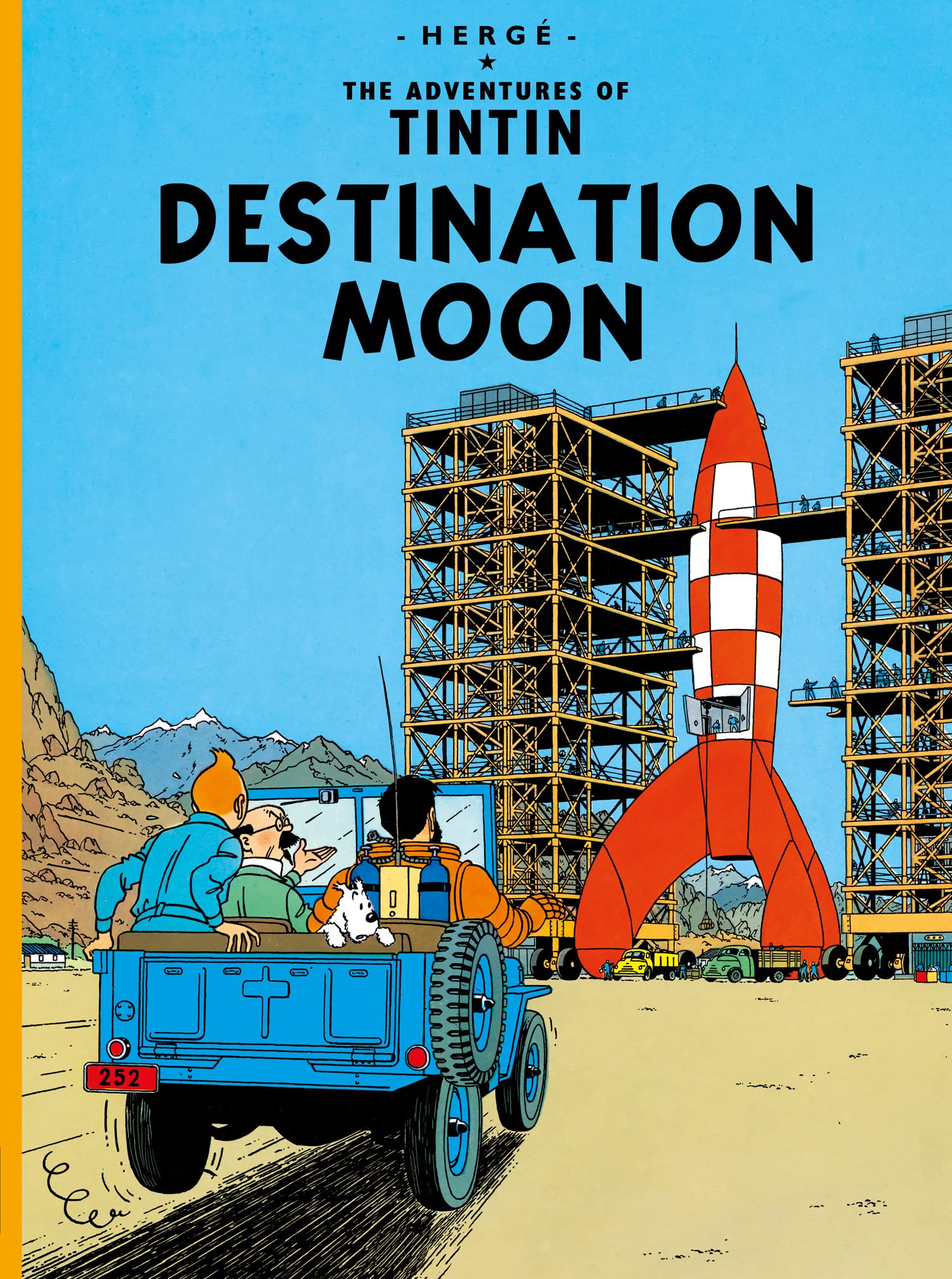
Explorers on the Moon, by Hergé, is the seventeenth book in The Adventures of Tintin. It’s the second part of a two-book arc in which Tintin, Haddock, and Calculus land on the Moon.
The plot of Explorers on the Moon moves a little faster, and there are a series of smaller challenges, culminating in the discovery of the stowaway Jorgen, who is aided by the traitor Wolff. Jorgen first appeared in King Ottokar’s Sceptre, which suggests that the unnamed enemies from the previous book were working for the nation of Borduria.
Staying true to Hergé’s focus on realism in this arc, the story ends in a darker way than most other Tintin comics: Jorgen is killed during a struggle with the reformed Wolff, who later sacrifices himself by exiting the airlock into space to give the rest of the crew enough oxygen to make it back to Earth. Hergé was compelled by the Church to soften this suicide by implying that Wolff might have survived,1When the story was first published Hergé was persuaded by the Church, against his wishes, to modify this part of the narrative to allow for the possibility of a miracle. Wolff’s letter refers to the possibility that he might escape death, which dampens the suicidal tone.—“Explorers on the Moon” Tintin.com. 2021. Retrieved July 12, 2025. although the reference is so weak that it barely registers.
When the story was first published Hergé was persuaded by the Church, against his wishes, to modify this part of the narrative to allow for the possibility of a miracle. Wolff’s letter refers to the possibility that he might escape death, which dampens the suicidal tone.